


The Freight Forwarder Does One Thing Well: Ship
A freight forwarder is a logistics specialist. Their job is to receive cargo in Miami, consolidate it into a container or airfreight shipment, handle customs documentation, and get it moving toward your port. They’re good at that. That’s what they’re built for.
But here’s the problem: their job starts when the cargo arrives at their warehouse. Everything that happens before that — finding the right supplier, negotiating the price, verifying what you’re actually getting, making sure it was correctly packaged, applying for your sales tax exemption — that’s not their job. And in most cases, they won’t touch it.
For Caribbean businesses buying from the US, that gap between “placing an order online” and “cargo arriving at the freight forwarder” is exactly where the money gets lost.
The Sales Tax Problem Nobody Talks About
Florida charges 6% sales tax on most purchases. If you’re a company in Haiti, Martinique, or Jamaica buying equipment for export, you are legally exempt from that tax — but only if you claim it correctly at the time of purchase.
Your freight forwarder can’t do that. By the time the package hits their dock, the invoice has already been issued. The tax has already been charged. It’s too late.
REAL EXAMPLE — You order $15,000 of IT equipment. Nobody applies the export exemption. You just paid $900 in tax you didn’t owe. On a $50,000 industrial order, that’s $3,000 gone. A procurement agent applies the Florida export exemption (Florida Statute 212.06(5)) at point of sale — automatically, every time.
Every Package Is a Separate Fee pay.
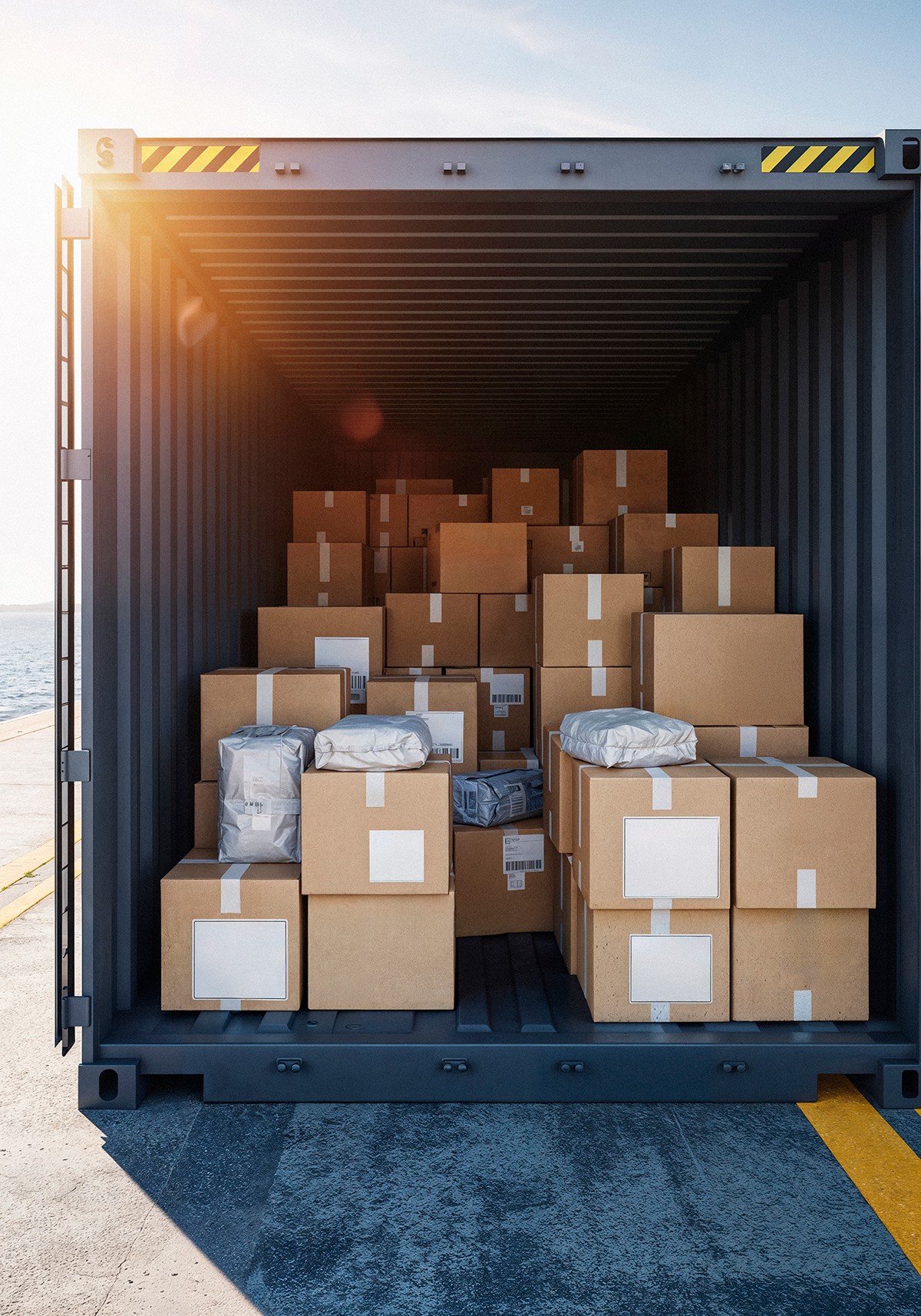
Every separate package or pallet a freight forwarder receives generates its own handling entry — its own Airway Bill or Bill of Lading reference, its own receiving fee, its own invoice line. If you’re ordering from 5 different US vendors, that’s 5 receiving fees, 5 tracking numbers, 5 sets of documentation, and 5 times the dimensional weight calculation working against you.
What a procurement agent does differently:
- Purchases from all vendors using a single buyer account
- All packages ship to one Miami address — the agent’s warehouse
- Everything is received, checked, and consolidated into one shipment
- One Bill of Lading. One set of fees. One handoff to your freight forwarder.
Repacking: The Most Underestimated Cost Saver in the Business
US vendors pack for retail or domestic distribution. That means oversized boxes, excessive void fill, multiple layers of cardboard, and a lot of dead air. When you ship internationally, you pay for that dead air. Dimensional weight (DIM weight) is calculated by the size of the box — not just what’s inside it. Air freight charges you full price for empty space.
A freight forwarder receives your box and puts it in a container as-is. They’re not going to open it, strip the retail packaging, and repack it into a tighter configuration. That’s not their service.
A procurement agent who handles consolidation at the Miami warehouse will:
- Remove excess retail packaging and void fill
- Repack multiple items into the smallest logical configuration
- Reduce total cubic volume — which directly reduces freight cost
- Combine orders from multiple vendors into one consolidated shipment
- Verify contents and condition before anything is sealed and shipped
On a typical mixed order of IT equipment and industrial parts, repacking can reduce shipped volume by 20–40%. On a $2,000 air freight bill, that’s $400–$800 back in your pocket before the plane even takes off.
Sourcing Is Not Shipping
Your freight forwarder cannot find you a better price on a John Deere part. They don’t have accounts with Ingram Micro, Grainger, or Airgas. They can’t tell you which distributor has the item in stock today versus the one with a 6-week backorder. They won’t call three vendors to compare pricing on industrial compressors or commercial laundry equipment.
That’s procurement work. It requires supplier relationships built over years, familiarity with US wholesale pricing, and the ability to buy on behalf of a foreign company. Caribbean businesses that buy directly from US websites already know the problem: cards get declined, accounts get flagged, vendors won’t ship internationally, and customer service doesn’t speak French or Kreyòl.
One More Thing Freight Forwarders Don’t Have: Regional Knowledge
A freight forwarder based in Miami handles cargo to 50 countries. They know ports, transit times, and Harmonized Tariff codes. What they don’t know is your market.
They don’t know that certain products need to be labeled in French to clear customs in Martinique. They don’t know that a hospital in Port-au-Prince needs its generator parts declared a specific way to avoid port delays. They don’t know which brands your local technicians can actually service, or what the realistic lead time is given the current situation on the ground.
A procurement agent who has worked the Caribbean for 20 or 30 years carries that knowledge as part of the service. It doesn’t appear on an invoice line — but it shows up every time an order goes smoothly when it had no business going smoothly.
What regional expertise actually means in practice:
- Knowing which product specs work in your country’s electrical infrastructure (110V vs 220V, 50Hz vs 60Hz)
- Understanding import documentation requirements by market — Haiti, DR, Martinique, Jamaica all differ
- Flagging products that will face duty problems or be held at customs before they’re ordered
- Communicating in the right language — French, Kreyòl, Spanish, English — not just sending an email template
- Understanding urgency differently: when a factory is down or a hotel has no water, “we’ll process that in 3–5 business days” is not an answer
This is the difference between a logistics vendor and a procurement partner. One moves boxes. The other understands what’s in them, why you need them, and what happens if they don’t arrive.
What the Right Setup Actually Looks Like
The most cost-efficient procurement chain for a Caribbean business buying from the US:
1. PROCUREMENT AGENT Sources products, negotiates pricing, applies tax exemption, purchases on your behalf, receives all packages at Miami warehouse, verifies, repackages, consolidates.
2. FREIGHT FORWARDER Receives one consolidated, properly packed, correctly documented shipment. Does what they do best: moves it to your port.
3. YOU Receive the right products, in good condition, at the lowest total landed cost.
These two services are not competing. They’re sequential. When both are in place, the entire chain runs cleaner, cheaper, and with far fewer surprises at the other end.
Want us to handle the procurement side for your next order?
We’ve been running this model for Caribbean businesses since 1995. If you’re currently sending your own orders directly to a freight forwarder and wondering why the landed cost keeps climbing — this is usually why.
We source, purchase, consolidate, and repack — then hand off to your freight forwarder in Miami.
Contact us for a free quote: 📧 sales@comtechllc.us 📱 WhatsApp: +1 786-867-7347